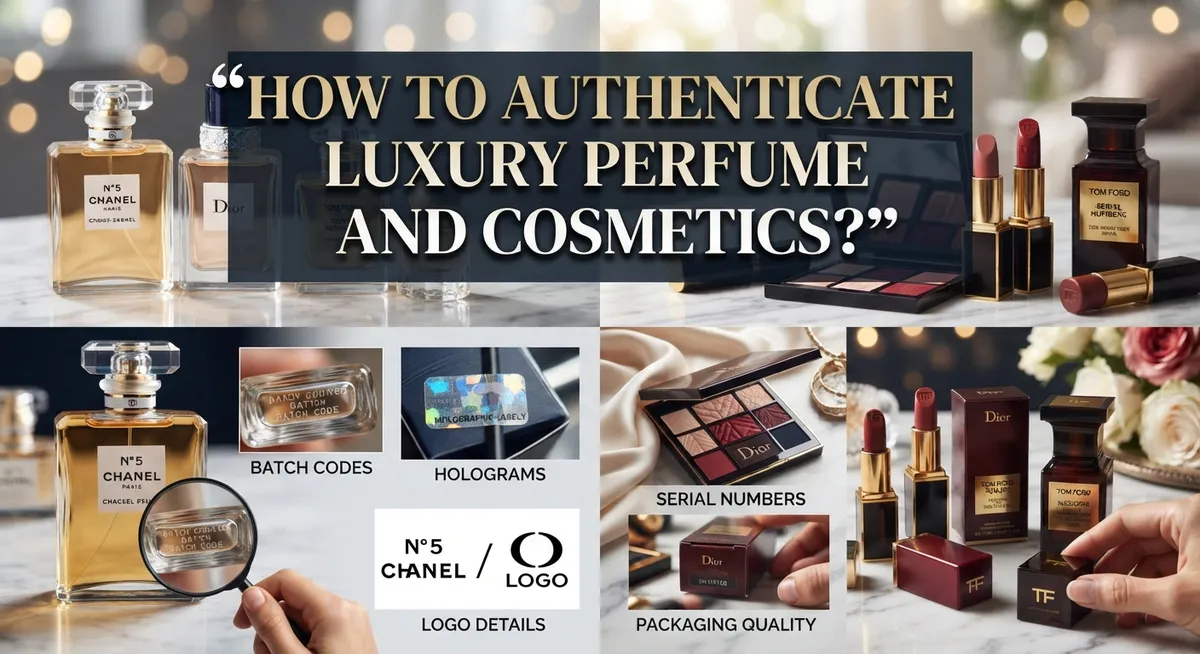
How to Authenticate Luxury Perfume and Cosmetics?
Have you ever opened a “luxury” perfume box and felt something was off? Maybe the box felt too light. Maybe the logo looked slightly blurry.
You are not alone. Counterfeit perfumes and cosmetics flood the market every year. They often look real at first glance.
But fake products can harm your skin. They can also waste your hard earned money.
The good news? You can learn to spot the difference. Authentic luxury items have specific signs that fakes cannot copy well.
This guide will show you exactly what to check. We will cover packaging quality and print details. You will learn how to inspect the bottle and cap closely.
We will also explain batch codes and QR codes. These small details often reveal the biggest clues.
By the end, you will know how to check every part of a product. You will feel confident buying perfume and cosmetics again.
Let’s break down each step so you can authenticate your next purchase with ease.
In a Nutshell
Checking for fake perfume and cosmetics does not need to be hard. Here is a quick summary to help you remember the key checks before you buy.
-
Check the packaging first. Look at print quality, color, and font. Real boxes feel sturdy and look sharp.
-
Inspect the bottle closely. Look for uneven seams, glue marks, or crooked printing. These are big red flags.
-
Look at the cap and nozzle. Authentic caps have clean engravings. The nozzle should spray evenly, not leak or sputter.
-
Match the batch codes. The code on the box must match the code on the bottle. If they differ, walk away.
-
Scan the QR code. Use your phone to scan it. Then check the result on the official brand website.
-
Check for tamper seals. Many luxury skincare items have safety seals. A broken or missing seal is a warning sign.
Following these simple steps helps you shop with confidence. You protect your money and your skin from fake goods.
Why Authentication Matters for Luxury Perfume and Cosmetics
Fake luxury perfumes and cosmetics flood the market every year. Counterfeiters spend significant money copying packaging, bottles, and labels. They hope you won’t notice the small differences that separate real from fake.
Why does this matter to you? Counterfeit products contain unknown ingredients. These ingredients can irritate your skin, cause allergic reactions, or worse. Your skin deserves safe, tested formulas from trusted sources.
When you buy authentic luxury items, you support the brand’s research and development. Real companies invest in quality ingredients, safety testing, and ethical sourcing. Fake products skip these steps entirely.
Authentication protects your wallet too. Counterfeit cosmetics often separate or break down quickly. You waste money on a product that doesn’t perform as promised. Authentic items last longer and deliver the results you expect.
Beyond personal safety, buying fake products funds criminal networks. These organizations use profits for illegal activities. Your purchase choices have real consequences.
Luxury brands spend years perfecting their formulas. They test for skin sensitivity, stability, and effectiveness. Counterfeiters cannot replicate this level of care. They focus only on making products look real on the outside.
Learning to authenticate products takes just a few minutes per purchase. You will check packaging quality, examine bottle construction, verify batch codes, and scan QR codes. These simple steps give you complete confidence in what you buy.
The effort is worth it. You protect your health, support legitimate businesses, and avoid wasting money. Authentication becomes easier with practice. Soon, you will spot fake products instantly.
Step 1: Inspect the Outer Packaging
The outer packaging is your first line of defense against counterfeit products. Start by examining the box material itself. Authentic luxury packaging uses high quality cardboard that feels substantial and sturdy in your hands. Fake boxes often feel flimsy or too light.
Next, inspect the printing quality closely. Real luxury brands invest in crisp, clear printing with consistent colors. Look for any blurry text, uneven spacing, or colors that seem slightly off. Run your finger over the logos and text. Authentic products have smooth, even printing. Counterfeit boxes often show rough edges or raised ink spots where printing went wrong.
Check the spelling of every word on the box. Counterfeiters make simple mistakes like misspelled brand names or incorrect grammar. Compare the font style to official brand images online. The fonts should match exactly. Authentic packaging uses precise, professional typefaces throughout.
Examine the logo placement and design. The brand logo should be perfectly centered and match official versions. Fake products sometimes have logos that are slightly tilted, too large, or too small.
Look at the edges and seams of the box. Quality packaging has clean, tight seams with no gaps or loose flaps. Counterfeit boxes often have uneven gluing or visible gaps along the edges.
Check the color accuracy carefully. Colors should be vibrant and true to the brand’s official palette. Fake packaging sometimes uses slightly different shades that look “off” compared to authentic versions.
Finally, feel the texture of the box. Luxury packaging often has a specific finish, whether matte or glossy. The texture should feel consistent across the entire surface. Rough spots or uneven finishes signal a counterfeit product.
Step 2: Examine the Bottle Construction and Design
The bottle itself tells you a lot about whether a product is real. Authentic luxury perfumes and cosmetics have bottles constructed with precision. The glass should feel smooth and heavy in your hand.
Check the seams first. Real bottles have seamless joints where two pieces of glass meet. Run your finger along these seams. They should feel flush and smooth. Counterfeit bottles often have visible ridges, bumps, or rough edges at the seams. This happens because fake manufacturers use cheaper production methods.
Look at the glue marks around the base and cap. Authentic products use minimal, invisible adhesive. Fake bottles show excess glue that looks messy or discolored. The glue should never be visible on a real luxury item.
Examine the printing on the bottle carefully. Text and logos must be sharp and perfectly aligned. Hold the bottle under light and rotate it slowly. The printing should not blur, fade, or show uneven ink coverage. Counterfeit products often have smudged letters or crooked labels.
Check if the bottle sits flat on a table. Authentic bottles have level bases. Tilted or uneven bases indicate poor manufacturing quality.
The glass color matters too. Luxury perfumes use consistent, high quality glass. The color should match the brand’s standard. Fake bottles sometimes use slightly different tinted glass because manufacturers source from different suppliers.
Feel the weight of the bottle. Authentic luxury bottles feel substantial. Light, flimsy bottles are red flags. The thickness of the glass should be noticeable when you hold it.
Take time to inspect these details. A few minutes of examination now saves you money and protects your skin later.
Step 3: Check the Cap, Nozzle, and Engravings
The cap and nozzle reveal a lot about whether your perfume or cosmetic is genuine. Luxury brands invest heavily in these small details because customers notice them immediately.
Start by examining the cap’s engravings. Authentic caps feature crisp, deep engravings that feel precise when you run your finger over them. Counterfeit caps often have shallow, blurry engravings or spelling mistakes. The engraving should match the brand’s official style exactly. Look at the depth and clarity under good lighting.
Next, inspect the nozzle quality closely. Real luxury nozzles fit snugly onto the bottle without gaps or wobbling. The nozzle should spray or dispense smoothly without leaking. Fake nozzles often feel loose or cheap. They may leak when you first use them. The threading should be tight and well made.
Check where the cap connects to the nozzle. This joint should be seamless and flush. Any gaps, misalignment, or rough edges suggest a counterfeit product. The cap should twist on and off smoothly without resistance or grinding sounds.
Feel the material of the cap. Luxury brands use quality plastics, metals, or glass for caps. Counterfeit caps often feel thin or flimsy. The weight should feel substantial in your hand.
Look at the logo or branding on the cap itself. It should be sharp and centered. Misaligned logos or faded printing are red flags. Compare the cap’s appearance to official brand photos online.
Finally, check for any manufacturing defects. Real luxury items have zero defects. Scratches, dents, or imperfections on the cap suggest a fake product. Take your time with this inspection step because it catches many counterfeits that slip past other checks.
Step 4: Verify Batch Codes and QR Codes
Batch codes and QR codes are your most powerful tools for confirming authenticity. These codes connect your product directly to the brand’s official database.
Start by locating the batch code. You’ll find it printed on both the box and the bottle itself. The code typically appears as a series of numbers and letters. It might be stamped on the bottom of the bottle or printed on the back of the box.
Compare the batch codes carefully. They must match exactly between the bottle and the box. If they differ, the product is counterfeit. Check the printing quality too. Authentic codes are clear, sharp, and properly aligned. Smudged or poorly printed codes are red flags.
Next, examine the QR code if present. Most luxury brands now include QR codes on packaging. Use your phone camera to scan it directly. The code should link you to the brand’s official website or verification page.
Visit the brand’s official website to verify your code. Enter the batch code in their authentication tool. Legitimate brands provide instant verification results. The system will confirm whether your product is real.
Pay attention to what the verification tells you. Real products show matching batch information, production dates, and product details. Counterfeit codes either won’t scan or lead to error messages.
Don’t skip this step. Batch code verification catches most fakes. Counterfeiters struggle to replicate working QR codes and database systems. This layer of protection is nearly impossible to fake successfully.
Take your time scanning and verifying. Spending two minutes here saves you from using dangerous counterfeit products on your skin.
Step 5: Confirm Tamper-Evident Seals on Skincare Products
Tamper-evident seals act as your final checkpoint for skincare authenticity. These security features show whether someone has opened or tampered with the product before you purchased it.
Look for the main seal first. Most luxury skincare brands place a seal across the box flap or under the lid. The seal should be intact, smooth, and properly adhered. Run your finger across it gently. Authentic seals feel secure and don’t peel away easily.
Examine the seal’s printing quality closely. The brand logo, text, or holographic elements on the seal must be sharp and clear. Counterfeit seals often have fuzzy printing or misaligned graphics. Check if the seal uses holographic technology. Many premium brands add holograms that shift color when you tilt them at different angles.
Next, inspect where the seal connects to the packaging. The edges should be straight and even. Look for any gaps between the seal and the box. Poorly applied seals indicate a fake product.
Check the adhesive strength. Authentic seals stay firmly attached even after careful inspection. Fake seals sometimes bubble up or separate from the packaging material.
Open the product carefully if you’ve confirmed other authenticity markers. Inside the jar or bottle, you may find additional seals under the lid. These inner seals should also be intact and properly positioned.
Pay attention to any unusual textures or materials. Authentic seals use quality materials that feel premium to the touch. They don’t crack, crumble, or leave residue on your fingers.
If any seal appears damaged, opened, or poorly made, the product is likely counterfeit. Trust your instincts. Legitimate brands invest heavily in tamper-evident technology to protect their customers and reputation.
Common Mistakes to Avoid During Authentication
Many people rush through authentication and make critical errors that allow counterfeits to slip through. Understanding these mistakes helps you avoid them.
The biggest mistake is ignoring mismatched batch codes between the bottle and box. Genuine products always have identical codes in both locations. If the numbers differ or one location is missing a code entirely, the product is fake. Take time to compare these codes side by side before making any purchase.
Another common error is overlooking smudged or poorly printed codes. Authentic batch codes are crisp, clear, and perfectly legible. Counterfeiters often rush their printing process, leaving codes that look faded, blurry, or incorrectly aligned. Examine the code under good lighting to spot these quality issues.
Many people skip the official verification step entirely. Just because a batch code exists doesn’t mean it’s real. You must scan QR codes through the brand’s official website or app to confirm the product is registered in their system. This step catches most fakes that have copied legitimate batch codes.
Failing to inspect cap engravings is another oversight. Luxury brands engrave their caps with precision and consistency. Counterfeit caps often show shallow engravings, uneven depth, or spelling errors in the branding. Run your finger across the engraving to feel the quality.
Finally, people ignore the overall packaging weight and material quality. Authentic boxes use heavier cardstock and premium printing. Fake packaging feels lighter and cheaper. Hold the box in both hands and assess its quality compared to other luxury items you own.
Taking these precautions protects your investment and ensures you receive genuine products.
Troubleshooting Uncertain or Inconclusive Checks
When your authentication checks don’t give you a clear answer, stay calm. Inconclusive results happen with legitimate products too. Here’s how to move forward.
First, gather all your evidence together. Write down everything you’ve already checked. Note which tests passed and which seemed unclear. This list helps you see patterns. Sometimes one weak result doesn’t mean the product is fake.
Contact the brand directly if you’re uncertain. Most luxury brands have customer service teams ready to help. Provide photos of your batch code, packaging, and bottle. The brand can tell you if your code exists in their system. They may also spot regional variations you didn’t know about. Authentic products sometimes have regional differences in packaging or printing.
Ask about where you bought it. If you purchased from an authorized retailer, that’s a strong positive sign. Counterfeiters rarely work with official sellers. Check the brand’s website for their list of authorized retailers. If your seller isn’t listed, that raises concerns.
Consider getting a professional opinion. Some authentication services specialize in luxury items. They have databases and tools beyond what consumers access. This option works well if you spent significant money on the product.
Look at the overall picture, not just one detail. Real products sometimes have minor printing variations or slight imperfections. Counterfeits usually fail multiple checks, not just one. If most of your tests passed and only one seemed odd, the product is likely genuine.
Trust your instincts too. If something feels wrong after all your checks, you have the right to request a refund or return. Your peace of mind matters.
Final Thoughts
Authenticating luxury perfume and cosmetics takes practice, but it gets easier with time. Trust your instincts when something feels off about a product.
Small details tell big stories. A misspelled word, a rough seam, or a mismatched batch code all point to potential problems.
Always check packaging, bottle construction, and batch codes together. No single check gives you the full picture alone.
QR codes and official brand websites remain your best friends. They connect you directly to the source, cutting out guesswork.
Remember that genuine products show consistency everywhere. The box, the bottle, and the cap should all match in quality and detail.
Slow down during every inspection. Rushing leads to missed clues that counterfeiters count on you overlooking.
Buying from authorized retailers reduces your risk significantly. This simple habit prevents many authentication headaches before they start.
When doubts linger, reach out to the brand itself. Customer service teams often clear up confusion within minutes.
Building this skill protects your money and your confidence. You deserve products that match what you paid for.
Authentication is not about being suspicious of everything. It is about knowing what to look for and checking it calmly.
Every luxury brand invests heavily in quality control. That investment shows up in consistent, precise details you can verify.
Keep learning about new counterfeit tactics as they emerge. Staying informed keeps you one step ahead of fraudsters.
Your careful approach today builds smarter shopping habits for tomorrow. Genuine luxury items deserve genuine buyers who know what to check.
Frequently Asked Questions
How do I check if a batch code is real?
Look at the batch code on both the bottle and the box. They must match exactly. Real batch codes are clear and properly printed, never smudged or faded. You can scan the QR code on the packaging using your phone. Visit the official brand website and enter the code into their verification system. If the system recognizes it, that’s a positive sign. If the code doesn’t exist in their database, the product is likely counterfeit.
What packaging details should I inspect first?
Start by examining the print quality on the box. Authentic luxury items have sharp, precise printing with no blurry edges. Check that all text is spelled correctly and fonts are consistent throughout. Feel the box material—it should feel substantial and heavy, not thin or flimsy. Look closely at logos and brand symbols. They should be perfectly aligned and detailed. Compare the colors to official brand images online. Counterfeit boxes often have slightly off colors or poor color matching.
Why does the bottle cap matter during authentication?
The cap reveals a lot about product quality. Examine any engravings or details on the cap. They should be crisp and well defined. Check the nozzle or spray mechanism. It should feel smooth and operate without resistance. Look for glue marks or uneven seams where the cap connects to the bottle. Real products show careful assembly with no visible adhesive drips. Counterfeit caps often feel cheap and have rough edges or loose components.
Can I trust QR code verification completely?
QR codes are highly reliable tools, but they’re one part of a complete check. Scan the code and see if it directs you to an official brand page. Some counterfeits include fake QR codes that lead nowhere or to suspicious websites. Always verify the URL matches the real brand domain. Combine QR code verification with your visual inspection of packaging and the bottle itself. No single check guarantees authenticity, but multiple checks together build confidence.

DK is the founder and editor of The Affluent Finds, where he explores the world of luxury appliances, premium products, and designer accessories to help readers make smarter, more refined purchasing decisions. With a passion for quality craftsmanship and an eye for detail, DK delivers honest, in-depth reviews and comparisons so you never have to settle for less.