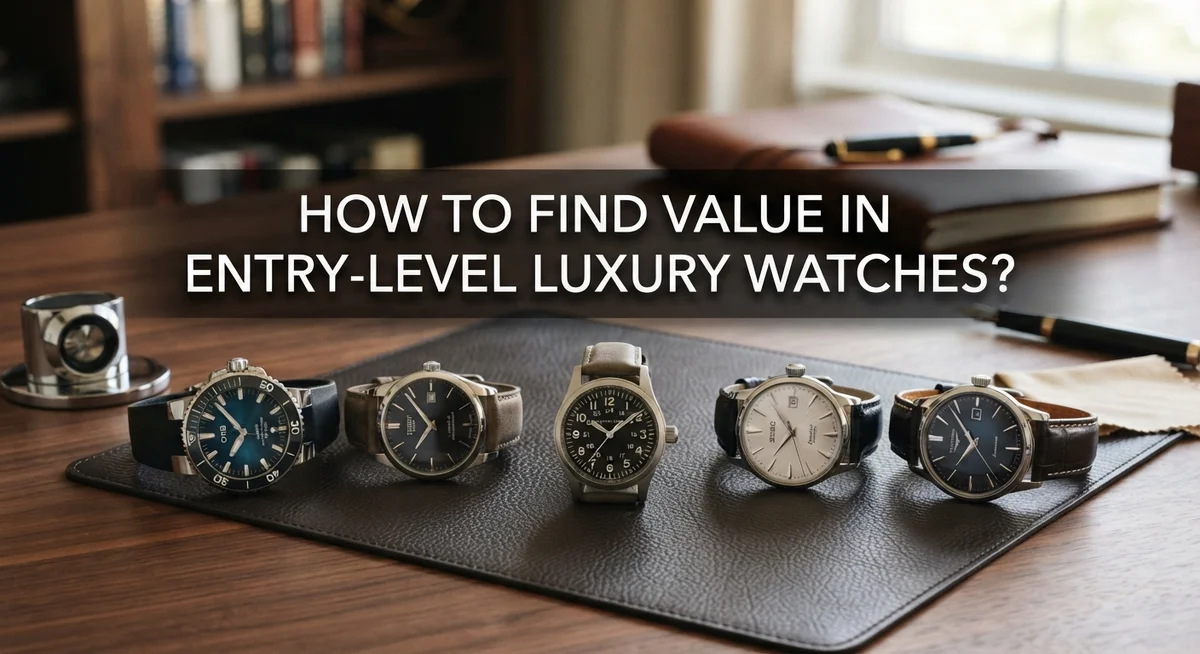
How to Find Value in Entry-Level Luxury Watches?
Buying your first luxury watch feels exciting. It can also feel confusing.
You want something that feels special. But you also want your money to go somewhere smart.
Here’s the good news. Entry-level luxury watches exist for exactly this reason.
They give you real craftsmanship. They give you quality movements. And they do this without draining your savings.
But not every watch in this category holds its value. Some brands last for generations. Others fade fast once trends shift.
This guide breaks down how to find true value in entry-level luxury watches. You will learn how to set a smart budget first. You will discover why brand reputation matters more than most buyers realize.
We will also cover movement quality, finishing standards, and resale potential. These factors decide whether your watch becomes a lasting asset or a quick regret.
By the end, you will know exactly what separates a smart luxury purchase from an impulsive one. You will shop with confidence, not confusion.
Let’s get started.
In a Nutshell
Here’s a quick summary before you dive deeper:
-
Set your budget first. Entry-level luxury watches typically range from €1,500 to €10,000. Know your limit before you start browsing.
-
Movement quality matters most. Check if the watch uses an in-house movement or a standard one. This affects both performance and value.
-
Brand reputation counts. Research the heritage and history behind each brand. A trusted name often means better craftsmanship.
-
Finishing details tell the story. Look closely at polish, artisanal touches, and overall durability. These small things reveal true quality.
-
Resale value deserves attention. Many buyers ignore this and lose money later. Check the secondary market liquidity before you buy.
-
Avoid impulsive decisions. Skipping the budget step often leads to regret. Smart choices come from patience, not excitement alone.
These points give you a solid starting point. Keep them in mind as you explore your options. They will help you spot real value instead of empty hype.
What Defines an Entry-Level Luxury Watch
An entry-level luxury watch sits at a specific price point where genuine craftsmanship begins. This range typically starts around €1,500 and extends to €10,000, though exact figures vary by region and currency.
What separates these watches from ordinary timepieces? Artisanal finishing and movement quality stand out as the primary factors. A luxury watch receives hand-polishing on its internal components, not just its exterior. The movement inside operates with precision tolerances that standard watches simply cannot match.
Brand heritage plays a crucial role in this definition. Established manufacturers bring decades or even centuries of watchmaking expertise to each piece. This history influences how movements are constructed, how cases are finished, and how the watch performs over time.
The materials matter too, but not always in obvious ways. A luxury watch uses quality steel, precious metals, or specialized alloys that resist corrosion and maintain their finish. More importantly, these materials receive careful finishing that reveals their natural beauty.
Movement type distinguishes luxury watches significantly. Some brands use in-house movements they design and assemble themselves. Others source movements from specialized manufacturers but finish and regulate them to exacting standards. Both approaches can produce excellent results, though in-house movements often command higher respect.
Accuracy and reliability form another key definition point. Entry-level luxury watches maintain precise timekeeping within tight specifications. They survive daily wear without constant adjustment or servicing.
The dial and hands receive individual attention during assembly. Printing quality, lume application, and hand finishing all reflect the maker’s commitment to detail. These small elements accumulate to create watches that feel noticeably different when you hold them.
True entry-level luxury watches prove their value through longevity. They continue functioning beautifully after years of wear. They maintain their appeal in the secondary market because collectors recognize their quality. This combination of craftsmanship, performance, and lasting value defines what makes a watch genuinely luxurious at the entry level.
Why Movement Quality Matters More Than You Think
Movement quality separates a watch that lasts decades from one that disappoints after a few years. The movement is the engine inside your watch. It controls every tick, every hand movement, and every function. When you buy an entry-level luxury watch, you are paying for precision engineering that standard watches simply cannot match.
A quality movement performs two critical jobs. First, it keeps accurate time within strict tolerances. Second, it operates smoothly and reliably for years without constant maintenance. Luxury brands invest heavily in movement development because this component determines your watch’s reputation.
In-house movements versus standard movements tell you a lot about value. Some brands design and build their own movements from scratch. This approach costs more but delivers superior quality control. Other brands use movements made by established suppliers. Both can be excellent, but in-house movements typically command higher resale prices because collectors recognize the engineering effort behind them.
Finishing quality inside the movement matters more than most buyers realize. Polished components, decorated surfaces, and precise assembly all add to durability and aesthetics. When you open the caseback and see a beautifully finished movement, you are looking at hours of skilled labor. This craftsmanship justifies the price difference between entry-level luxury and mass-produced watches.
Accuracy standards also reflect movement quality. A luxury watch should maintain accuracy within a few seconds per day. Better movements achieve this consistently across temperature changes and positions. This reliability means you trust your watch in any situation.
Testing movement quality before purchase matters. Ask to see specifications for daily accuracy rates. Request information about service intervals and maintenance costs. Understand whether the movement uses jeweled bearings, which reduce friction and extend lifespan. These details reveal whether a brand truly prioritizes movement excellence or simply charges luxury prices for average internals.
Understanding Brand Heritage and Reputation
Brand heritage tells you whether a watch maker knows what they are doing. A company with 50 years of watchmaking experience builds differently than one that started last year. This history matters because it shows consistent quality over time.
When you research a brand, look at their founding date and what they have produced across decades. Did they focus on watches the entire time, or did they jump into the business recently? Companies that stayed committed to horology typically understand materials, movements, and finishing better than newcomers.
Reputation builds through real customer experiences. Check what people say about specific models after owning them for years. Do watches from this brand still work well after five years? Ten years? This information tells you far more than marketing claims.
Look at whether the brand maintains their own workshops or relies on external manufacturers. Brands that control their production tend to keep higher standards because they directly manage quality. When a company outsources everything, quality becomes harder to guarantee.
Heritage also connects to how a brand handles customer service and repairs. Established watchmakers usually maintain service centers and keep spare parts available for older models. This matters because you might own the watch for 20 years or more.
Check if the brand has won industry recognition or awards. These come from other watchmakers and experts, not just marketing departments. Industry respect suggests genuine technical skill.
Ask yourself whether the brand appears in watch collector communities and forums. Long-standing brands typically have active communities where owners discuss experiences. This active community often means the brand earned trust through consistent performance.
Brand reputation also affects resale value. A watch from a respected heritage brand holds its value better in the secondary market. Buyers recognize the name and trust the quality, which keeps demand steady even years later.
In-House Movements vs. Standard Movements Explained
In-house movements are timepieces that a brand designs, assembles, and finishes within their own facilities. Standard movements come from external manufacturers who produce calibers for multiple watch brands. Understanding this difference helps you recognize where your money goes.
In-house movements represent significant investment. A brand must maintain engineers, machinists, and finishing specialists on staff. They control every step from conception to assembly. This vertical integration costs more but delivers consistency. You get a movement that reflects the brand’s specific standards and philosophy.
Standard movements use calibers produced by established manufacturers. Many respected brands rely on these movements because they offer proven reliability and excellent performance. The manufacturer supplies the same movement to multiple brands, which keeps costs lower. This doesn’t mean inferior quality—many standard movements perform exceptionally well and earn industry respect.
The finishing difference matters more than you might expect. In-house movements often receive hand polishing, beveled edges, and decorated surfaces visible through display case backs. Standard movements typically come with basic finishing. When you look at the movement, an in-house caliber shows visible craftsmanship. This aesthetic quality connects directly to the brand’s identity.
Accuracy and reliability depend more on caliber design than ownership. A well-made standard movement often outperforms a poorly finished in-house caliber. Check specifications for daily accuracy rates—typically between minus 4 and plus 6 seconds per day for quality watches.
Consider your priorities when comparing movements. If you value visible artisanal work and brand heritage, in-house movements justify their cost. If you prioritize pure performance and long-term reliability, excellent standard movements deliver outstanding value. Both approaches appear in entry-level luxury watches. Your choice depends on whether you want to see the craftsmanship or simply experience reliable timekeeping.
How to Evaluate Craftsmanship and Finishing Standards
Evaluating craftsmanship and finishing standards requires you to look beyond the dial. Focus on what happens inside and outside the case. Quality finishing separates entry-level luxury from mass-produced alternatives.
Start by examining the case finishing. Run your finger along the surfaces. Polished areas should feel smooth and reflect light evenly. Brushed surfaces should show consistent directional lines. Any rough spots or uneven transitions indicate rushed manufacturing.
Look at the dial closely. Check whether printing is sharp and aligned. Examine the lume (luminous material) on hands and markers. It should be applied evenly without drips or overflow. Poor dial finishing suggests the entire watch received minimal attention.
Inspect the caseback if visible. You should see polished surfaces that meet beveled edges cleanly. Engravings should have crisp, clean lines. Rough edges around text indicate lower finishing standards.
Ask about hand polishing and finishing techniques. Legitimate luxury brands document their methods. They can explain whether they use traditional polishing techniques or modern automation. Hand finishing takes time and costs more, but it shows commitment to quality.
Check the bezel action if applicable. It should rotate smoothly without grinding or catching. Clicks should feel precise and consistent. Loose or stiff movements indicate poor tolerances during assembly.
Examine the bracelet or strap construction. Solid links should fit tightly together. End links should align properly with the case lugs. Gaps or misalignment reveal careless assembly.
Request detailed specifications about surface treatments. Brands using PVD coating, sapphire treatments, or special polishing deserve recognition. These choices affect durability and appearance over years of wear.
Visit authorized retailers and handle multiple models. Comparison reveals differences immediately. Your hands detect quality that photos cannot show. Reputable dealers welcome this scrutiny because their watches withstand inspection. Poor craftsmanship becomes obvious when you hold several pieces side by side.
Assessing Resale Value and Secondary Market Liquidity
Resale value determines whether your watch holds its worth or depreciates quickly. Start by researching how specific models perform on secondary markets. Look at completed sales data from established watch trading platforms to see what buyers actually pay for used examples.
Secondary market liquidity tells you how easily you can sell your watch later. A watch with high liquidity sells fast. A watch with low liquidity sits listed for months. Popular models from established brands typically move quickly. Niche or discontinued models may take longer to find buyers.
Check the price gap between retail and secondary market prices. If a model sells for significantly less used, demand is weak. If used prices stay close to retail, the watch holds value well. This gap reveals market confidence in that particular timepiece.
Brand matters enormously here. Watches from heritage brands with strong reputations maintain value better than trendy options. Collectors trust these names. They bid competitively for them. Lesser-known brands struggle to attract buyers, even if the watch quality is excellent.
Model availability affects liquidity too. Limited production runs create scarcity, which can boost resale value. However, ultra-rare watches appeal only to serious collectors. You need a smaller buyer pool, which means slower sales. Mass-produced entry-level luxury watches from major brands attract more potential buyers.
Check whether the watch comes with complete documentation and original packaging. Buyers pay premiums for full sets. A loose watch without papers sells for less, sometimes significantly less.
Movement type influences resale appeal. In-house movements attract enthusiasts willing to pay more. Standard movements are reliable but less exciting to collectors, which can impact secondary market demand.
Visit forums and communities where collectors discuss specific models. Real owners share honest feedback about how their watches sold. This insider knowledge helps you predict resale performance before you buy.
Common Mistakes to Avoid When Evaluating Value
Many buyers make costly mistakes when evaluating entry-level luxury watches. Understanding these pitfalls helps you make smarter choices and protect your investment.
The biggest error is skipping budget planning. Without a clear spending limit, you drift into impulse purchases. Set your maximum amount before you start shopping. This keeps you focused and prevents overspending on features you don’t need.
Another frequent mistake involves ignoring resale value from day one. You assume your watch will hold its worth, but many entry-level models depreciate heavily. Check secondary market prices before buying. Compare what collectors actually pay versus retail prices. This gap reveals whether the watch truly holds value.
Many buyers overlook secondary market liquidity. A watch might be valuable, but if few people want to buy it, you’ll struggle to sell later. Popular models from established brands sell faster than obscure pieces. Research how quickly similar watches move in collector communities.
People also fail to verify complete documentation and original packaging. These items significantly impact resale value. Watches without boxes, papers, or service records lose appeal to future buyers. Always confirm what comes with your purchase.
Brand reputation matters more than most realize. Lesser-known brands often depreciate faster, even if the watch itself is well-made. Stick with manufacturers known for heritage and consistent quality.
Don’t rush the evaluation process. Take time to handle multiple models in person. Compare finishing quality across different price points. Ask retailers detailed questions about movement type, hand polishing, and surface treatments. Visit forums where collectors discuss specific models and their resale experiences.
Finally, avoid chasing trends. Limited editions and trendy designs often lose appeal quickly. Focus on classic models with proven staying power. Timeless watches attract buyers year after year, keeping resale value strong.
Final Thoughts
Finding value in entry level luxury watches takes patience. You need to balance craftsmanship, brand heritage, and resale potential. No single factor tells the whole story.
Set your budget first. This simple step prevents impulse buying. It also keeps your search focused on watches that fit your goals.
Movement quality matters more than flashy marketing. An in-house movement often signals better engineering and long term reliability. Standard movements can still perform well, but they rarely carry the same prestige.
Craftsmanship separates a good watch from a great one. Look closely at case finishing, dial details, and bracelet construction. These small details reveal how much care went into the piece.
Resale value deserves your attention early, not later. Some brands hold their worth better than others. Secondary market liquidity shows you how easily you can sell the watch if your needs change.
Documentation and original packaging boost your resale options. Buyers on the secondary market trust watches with complete paperwork. This small detail can significantly affect your future flexibility.
Avoid rushing your decision. Handle several models before committing to one. Comparing pieces side by side helps you notice differences you might otherwise miss.
Remember that price alone does not define luxury. A watch earns its status through craftsmanship, movement quality, and finishing. Keep this in mind as you compare options within your budget range.
Entry-level luxury watches offer real value when you approach them with knowledge. Research brand reputation. Study movement types. Check resale trends before you buy.
Your final choice should reflect both your personal taste and smart financial thinking. A watch you love, backed by solid craftsmanship and good resale potential, gives you lasting satisfaction. Take your time, ask questions, and trust the process you have built through careful research.
Frequently Asked Questions
What makes a watch “luxury” if not the price tag?
Luxury watches earn their status through craftsmanship and movement quality. The finishing on the internal components matters as much as what you see on the dial. A luxury watch uses precise engineering, often with hand-polished parts and careful assembly. Brand heritage also plays a role. Some manufacturers have spent decades or centuries perfecting their craft. The materials used, like sapphire crystals and quality metals, contribute too. Price reflects these elements, but high cost alone does not guarantee luxury.
Should I prioritize in-house movements or standard movements?
In-house movements show a brand’s commitment to quality control. The manufacturer designs and builds the movement themselves. This approach often means better accuracy and durability. Standard movements come from third-party suppliers. They can be reliable and excellent, but they lack the exclusivity of in-house options. Your choice depends on your budget and values. Entry-level luxury watches sometimes use standard movements to keep costs down. This does not make them poor choices. Many collectors appreciate standard movements for their proven track records and ease of servicing.
How do I know if a watch will hold its value?
Check the secondary market to see what similar models sell for used. Compare those prices to retail prices. A small gap suggests strong resale value. Research brand reputation and production numbers. Limited runs typically hold value better than mass-produced models. Documentation and original packaging boost resale appeal significantly. Visit collector forums to see which models stay in demand. Models that appear frequently in secondary markets tend to hold value well. Avoid trendy designs that may feel dated in five years.
What’s the biggest mistake entry-level buyers make?
Skipping budget planning leads to impulse purchases and regret. Set your spending limit before you start shopping. Another common error involves ignoring resale potential from the beginning. Buyers focus only on the watch itself, not its market position. This oversight can cost you thousands later.

DK is the founder and editor of The Affluent Finds, where he explores the world of luxury appliances, premium products, and designer accessories to help readers make smarter, more refined purchasing decisions. With a passion for quality craftsmanship and an eye for detail, DK delivers honest, in-depth reviews and comparisons so you never have to settle for less.